
Fluorescent ink has moved past being a novelty. It shows up in retail displays, decorative panels, security labels and stage graphics — anywhere a print needs to grab attention or carry a hidden marker. But “fluorescent ink” is not one product. There are five distinct technologies in use for large-format printing, and the right choice depends on your substrate, your application and how much environmental regulation you’re working under.
Here’s what’s actually on the market.
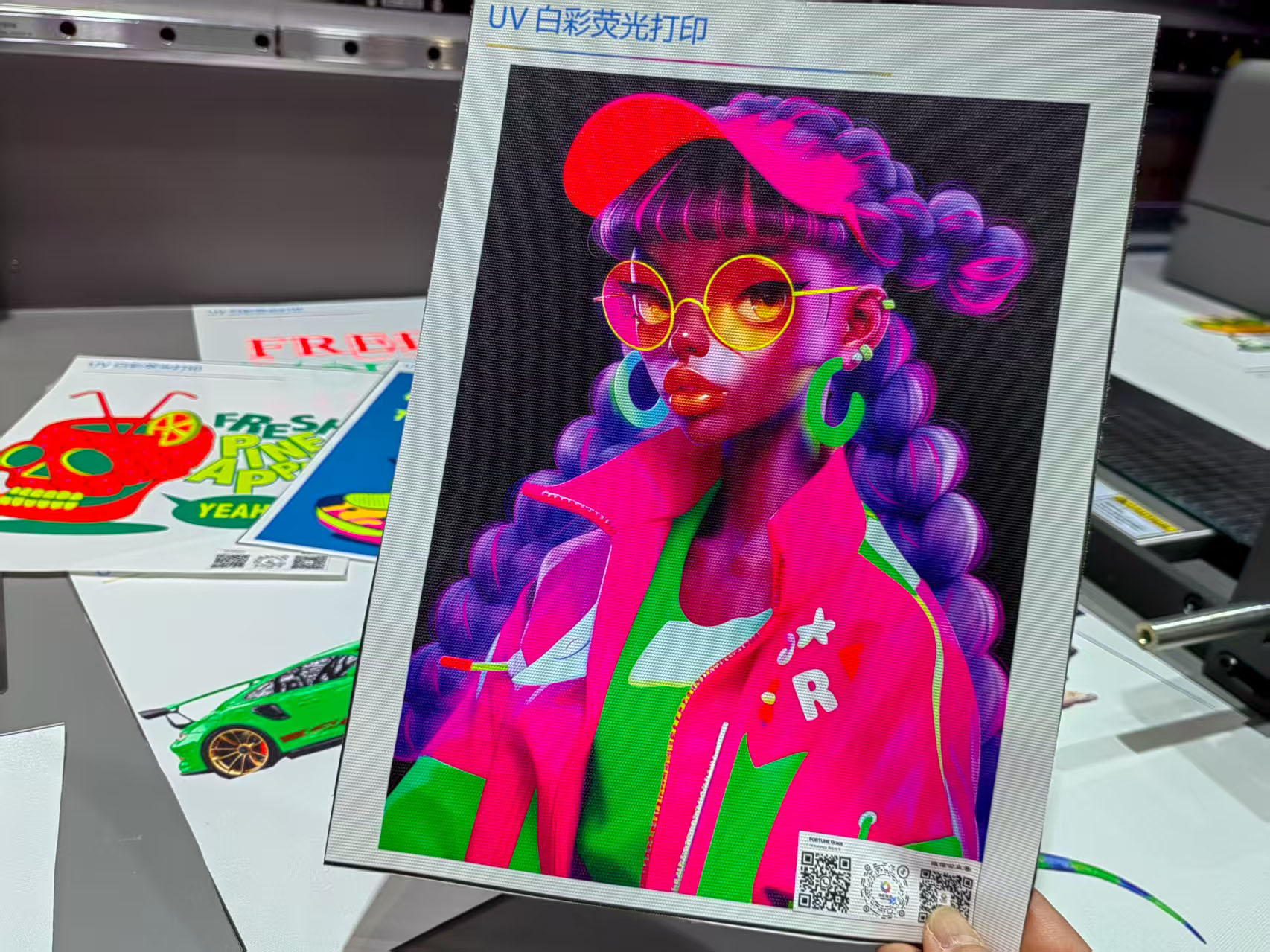
Water-based pigment fluorescent ink
This is the most common option for indoor work. It carries PANTONE certification and covers both pastel and fluorescent ranges, which makes it useful when a client hands you a Pantone number and expects the print to match. The formulation is water-based, so VOC levels stay low and it’s suitable for enclosed spaces.
The color layering matters here. Radiant Infusion technology — used in some of these ink sets — optimizes how fluorescent ink stacks with other colors, which is what separates a clean fluorescent print from a muddy one. Apply it over a white base and the color stays bright; skip the base and the fluorescent effect weakens quickly.
Where it gets used: promotional posters, retail displays, decorative prints, crystal porcelain panels and art reproductions. Anywhere the fluorescent effect needs to survive close viewing and indoor lighting.
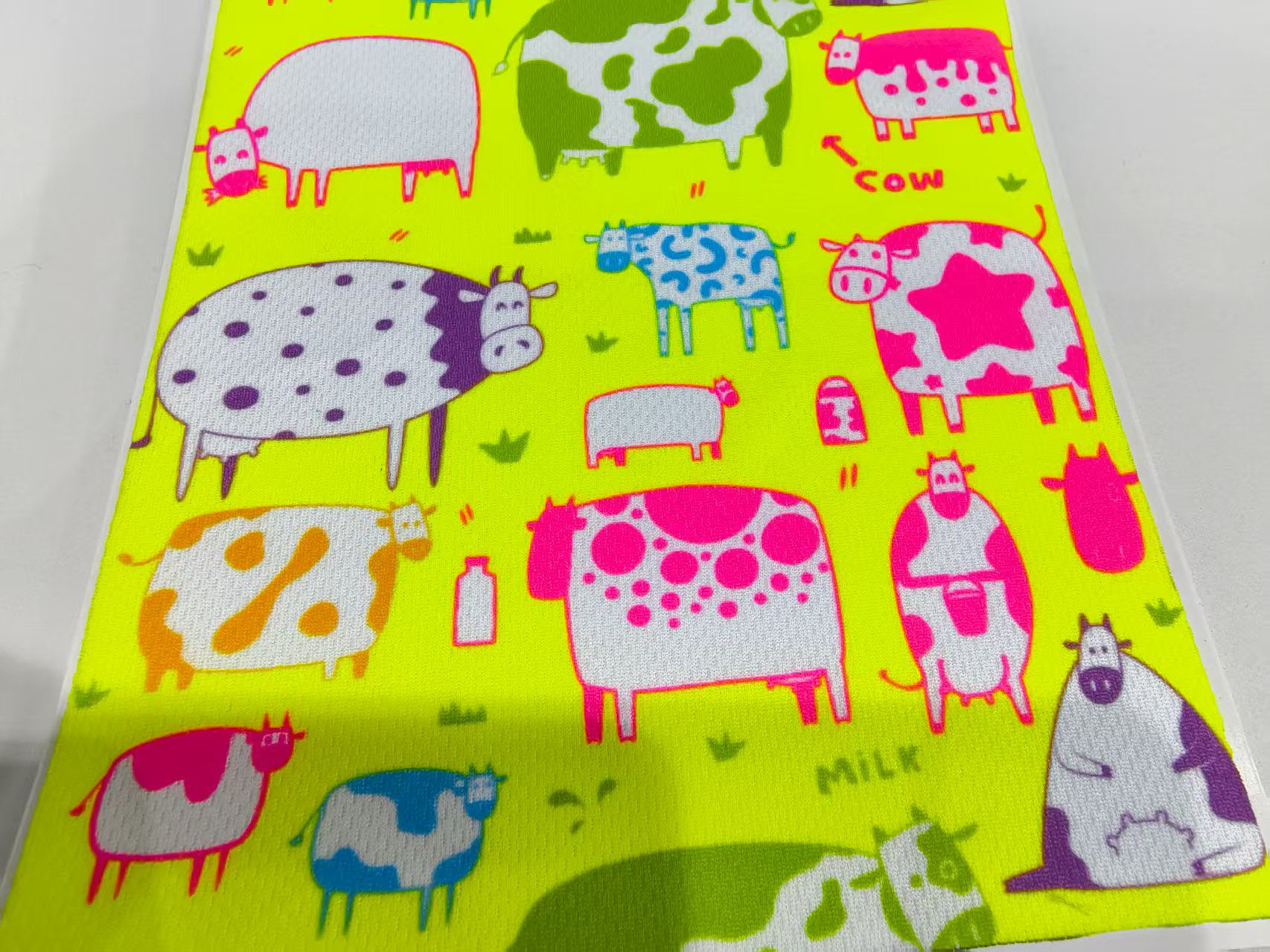
UV-curable fluorescent ink
This is the workhorse for non-absorbent substrates. It cures in 2–3 seconds under UV light, which means it adheres to metal, glass, acrylic and canvas without the drying time water-based inks require. Color brightness holds up well after curing, and the weather resistance is good enough for semi-outdoor use.
The applications split in two directions. On one side, industrial packaging and product tracing — food and pharmaceutical anti-counterfeit codes, security labels, night-glow displays. On the other, entertainment and retail: club and concert posters, black-light POP displays, safety warning labels. The same ink serves both because UV curing gives it the durability those applications need.
Solvent-based fluorescent ink
Solvent ink is chosen for outdoor durability. Vehicle wraps, backlit banners, adhesive vinyl — anything that sits outside and needs to hold color through weather. Under UV light the fluorescent effect is intense, which is why it shows up in nightlife advertising and outdoor event graphics.
The trade-off is environmental. Solvent inks release VOCs during drying, and that puts them under increasing regulatory pressure in many markets. If your workshop is in a region with strict emission rules, this option may not be viable regardless of performance.
Textile fluorescent ink
Textile printing splits into two chemistries. Reactive fluorescent ink works on natural fibers — cotton, linen, hemp — and bonds chemically to the fiber. Disperse fluorescent ink works on polyester and requires high-temperature fixation to lock the color in.
Where it gets used: fluorescent sportswear, stage costumes, event T-shirts, and home textiles like cushions and curtains. The reactive route gives softer hand-feel on natural fabrics; the disperse route is the only reliable option for polyester performance wear.
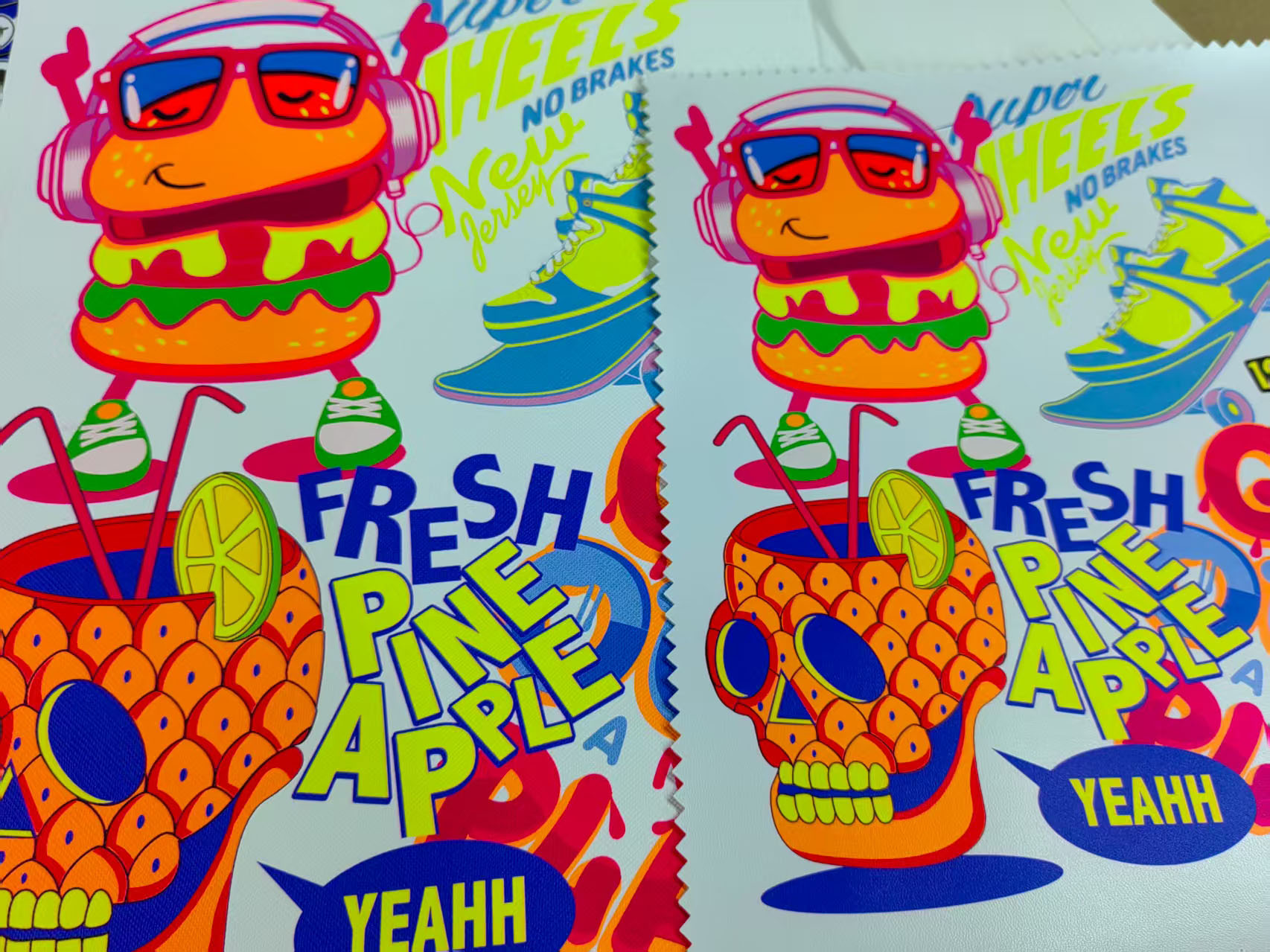
Quantum dot fluorescent ink
This is the newest and least commercially mature of the five. Quantum dot inks are built for high-resolution display and advanced anti-counterfeit work — MicroLED, AR/VR components, invisible encryption labels. Perovskite quantum dot formulations (CsPbBr3) have been used to tune solvent ratios and reduce the coffee-ring effect, which is one of the persistent challenges in printing these materials evenly.
It’s not a production-floor ink yet for most print shops. But it’s the direction high-security and display-grade fluorescence is heading.
What dominates in practice
For commercial large-format printing today, two categories carry most of the volume: water-based pigment fluorescent ink and UV-curable fluorescent ink. Water-based wins on indoor work and environmental compliance; UV wins on substrate versatility and durability.
OSNUO’s UV fluorescent and water-based fluorescent processes are already in use across anti-counterfeit marking, advertising signage and home décor applications, and the formulations meet low-VOC requirements. If you’re evaluating fluorescent capability for a specific substrate or application, that’s the place to start the conversation.
Post time: Oct-20-2026


