
Toy printing is distinctly different from regular UV printing. Its product categories are incredibly diverse, ranging from dolls and toy cars to badges and keychains. In this era of personalized customization, UV printing brings massive advantages to the toy industry.
The current toy market (especially designer toys and IP derivatives) is characterized by:
- Small Batches, High Variety: Traditional mold costs are too high to be amortized over small orders.
- Increasingly Complex Shapes: Modern figurines feature intricate details and significant height variations that traditional processes cannot reach.
- Slow Turnaround: Creating traditional printing molds usually takes 3-5 days, which fails to keep up with today’s market pace.
Furthermore, regular UV printing often faces the following challenges in toy industry applications:
1. Pain Points of Traditional Pad/Screen Printing
Dependence on Physical Molds: Traditional toy printing, especially pad printing, relies on silicone heads to “transfer” patterns onto toys. This requires extremely high-precision fixtures. If placed manually, excessive human error will lead to pattern misalignment.
Color Overprint Alignment: Traditional processes require a new mold and a new alignment for every additional color. In multi-color printing, if a shift occurs in any single step, the entire batch of products is scrapped due to “inaccurate overprinting.”
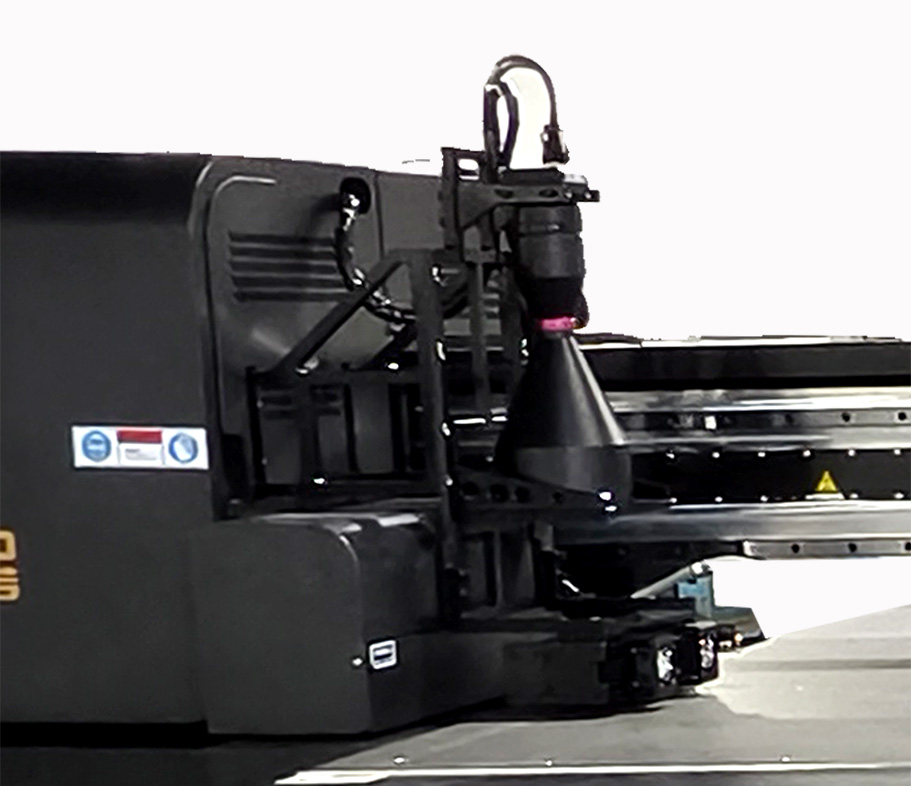
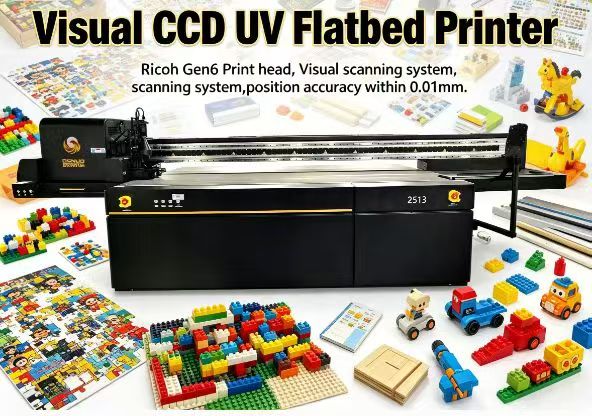
OSNUO UV printers are equipped with an advanced CCD visual positioning system. With the help of CCD visual positioning, the printer can automatically identify the position of the toys. You don’t need to make printing plates or custom jigs, saving significant time and effort. It not only accurately reproduces small and complex lines but also eliminates manual alignment steps. This accelerates the production of small-batch orders and reduces material waste caused by positioning errors. It solves the traditional challenge of “must be placed precisely” by achieving “random placement and automatic recognition,” directly targeting the industry’s pain points of slow manual placement and high mold costs.
2. Pain Points of “High-Drop/Irregular Items” in Regular UV Printing
Inkjet Dispersion Law: In physics, the recommended inkjet distance for UV printheads is usually 2-3mm. Once the distance increases, ink droplets are affected by air resistance during flight and shift, causing the pattern to become blurred.
Limitations of Irregular Items: Although traditional pad printing can cover curved surfaces, the silicone head will suffer from distortion when facing deep recesses or significant arcs. Meanwhile, regular flatbed UV machines are prone to “head strikes” due to insufficient height pre-setting.
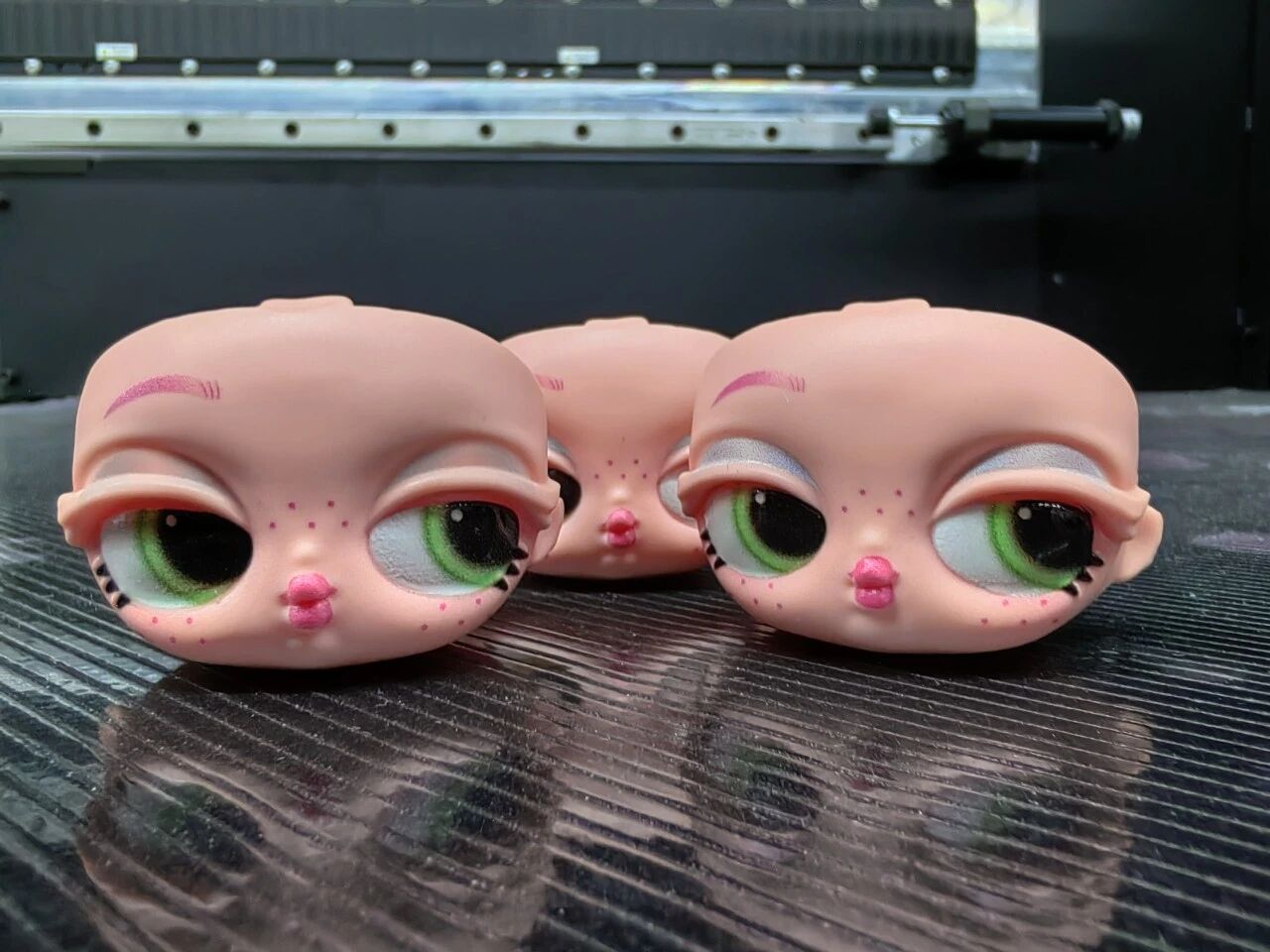
If you need to print on irregular toys, high-drop printing capability is crucial. OSNUO’s visual positioning UV printers support high-drop printing up to 25mm. It is equipped with professional waveforms and customized high-drop inks that perfectly match the structure of high-drop printers, easily handling height differences on toy surfaces. OSNUO’s high-drop printing technology has been fully verified in major toy industry clusters such as Yiwu and Chenghai in China and has won widespread recognition from local manufacturers.
Post time: May-11-2026


